(A) Evaluating Improper Integrals.
We may evaluate improper integrals of either the first or second kind using Maple. For example:
> int(exp(-x^2), x=-infinity..infinity);
> int(1/x, x=1..infinity);
> assume(p<=1): # The assume
routine sets variable properties and relationships between variables.
> int(1/x^p, x = 1..infinity);
> assume(q>1):
> int ( 1/(x*(log(x))^q) , x = 1..infinity);
> # When we make assumptions about a variable,
thereafter it prints with an appended tilde (~) to indicate that the variable
carries assumptions.
> assume (q>1);
> int ( 1/(x*log(x)*log(log(x))^q) , x
= 9..infinity);
> int(tan(x), x=0..Pi/2);
> int(1/sqrt(1-x^2), x = 0..1);
> int(1/log(x), x=2..infinity);
> int(1/sqrt(x), x=0..1);
> int((x^2+x^7+log(log(x))^49) / (1 + 4*x^9
+ exp(-x)), x=5..infinity);
> evalf(%);
> int (sinh(x) / (x*ex), x=1..infinity);
> int(cos(x)^5, x=0..infinity);
> int(sin(x) * exp(-x), x=0..infinity);
# What is the geometric significance of this answer? Sketch!
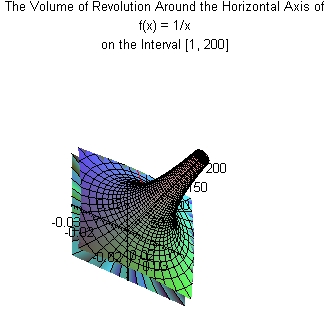
(B) Torricelli's Trumpet or Gabriel's Horn
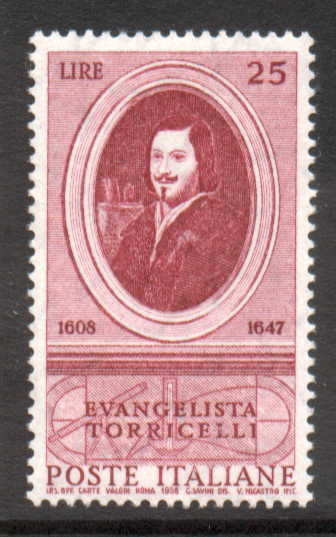
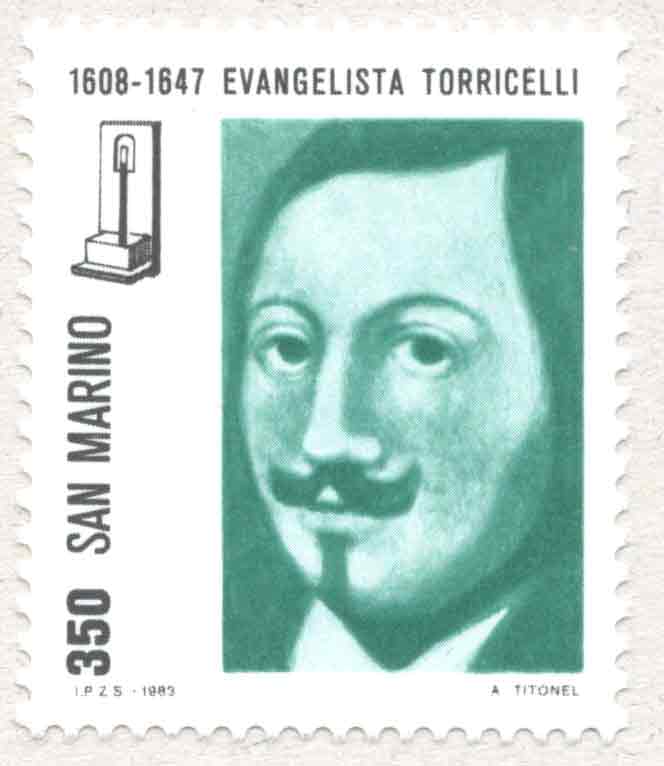
Evangelista Torricelli (1608 - 1647), a student of Galileo, made a discovery that amazed him. Let's examine what occurred.
Let us rotate the curve y = 1/x from 1 to infinity about the x-axis, thus obtaining an infinite solid of revolution. Let us call this solid the "horn of Gabriel", after the messenger of God in the old and new testaments.
(1) Using disks or shells, compute the volume of this solid. Is this volume finite or infinite?
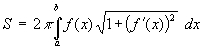
(2) The formula for surface area of a solid of revolution obtained by rotating the curve y = f(x) about the x-axis from x = 1 to x = b, is given by:
(3) Why was Torricelli amazed? Describe the paradox.
(C) Additional exercises.
1. Sketch the curve y = x3 sin(1/x) over the interval (0, 0.01]. Compute the arc length of this curve over the interval (0,1].
2. Find the work done by the force field F(x) = 1/x2
newtons in moving a particle along the x-axis from the point (1,0) to infinity.
 |
 |